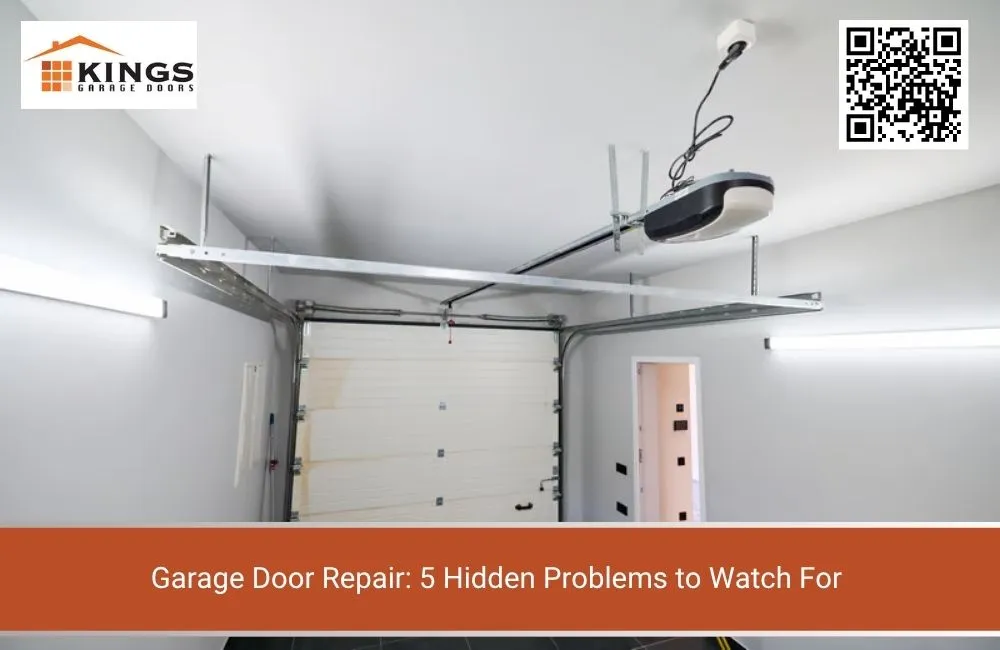
Garage Door Repair: 5 Hidden Problems to Watch For
Your garage door might open and close every day without showing obvious signs of trouble. However, smooth operation does not always mean every component is in good condition. Some garage door problems develop quietly behind panels, inside the opener, or around hardware that homeowners rarely inspect. By the time the door becomes stuck or stops working, the original issue may have already affected several connected parts.
For homeowners in Sacramento, Citrus Heights, and Carmichael, recognizing these hidden problems can make Garage Door Repair more manageable. Regular inspections help identify early wear, prevent unnecessary damage, and determine when professional attention is appropriate.
Understanding what happens beyond the visible panels is especially useful for households that rely on the garage as their primary entrance.
Why Hidden Garage Door Problems Are Easy to Miss
A residential garage door operates through several connected systems. Springs counterbalance the weight, cables help lift the door, rollers guide movement, and an automatic opener controls operation.
These components must work together for the door to function correctly.
A problem in one area can create additional stress elsewhere without immediately causing a breakdown.
For example, an opener may continue lifting a poorly balanced door. The homeowner sees a working system, but the motor may be compensating for mechanical resistance.
This is why garage door maintenance should involve more than checking whether the remote works.
Hidden Problem 1: Spring Fatigue Without Visible Damage
Garage door springs experience repeated tension changes during normal operation.
Every opening and closing cycle contributes to gradual wear. Eventually, a spring may lose performance or fail.
One challenge is that spring fatigue does not always produce an obvious visual warning.
A spring can appear intact while the door becomes increasingly difficult to lift.
Why Spring Balance Matters
The spring system is designed to counterbalance the door's weight.
When the system is correctly matched and adjusted, the opener should not need to overcome the entire weight of the door.
As spring performance deteriorates, the door may feel heavier, hesitate during movement, or place additional strain on the opener.
Homeowners may also notice that the door no longer moves as smoothly as it once did.
What Homeowners Should Watch For
A change in opening speed, unusual motor strain, or repeated hesitation can indicate that the lifting system needs inspection.
These symptoms do not automatically confirm spring failure because opener and track problems can produce similar behavior.
However, they should not be ignored.
Garage door springs operate under substantial tension. Homeowners should never attempt to adjust, unwind, or replace them without appropriate professional training.
A qualified technician can evaluate spring condition and determine whether adjustment, repair, or replacement is necessary.
Hidden Problem 2: Internal Opener Wear
Automatic garage door openers contain mechanical and electronic components that gradually wear with use.
A motor may continue running even when internal gears, drive components, or other parts are beginning to deteriorate.
The problem can remain hidden because most homeowners focus on the door itself rather than the equipment mounted above it.
Early Signs of Opener Trouble
An opener that becomes noticeably louder may be experiencing mechanical wear.
Other warning signs include delayed responses, inconsistent operation, unusual vibration, or movement that seems less controlled than before.
Sometimes the opener operates normally for several cycles before developing a problem.
That inconsistency can make the issue difficult to identify.
Why Replacing the Opener Is Not Always the Solution
An opener may struggle because the door is difficult to move.
If rollers are binding or the spring system is poorly balanced, installing a stronger opener does not correct the mechanical resistance.
The new motor may simply experience the same excessive workload.
Before replacing an opener, a technician should evaluate the door's balance and movement.
This helps distinguish an actual opener failure from a problem elsewhere in the system.
Hidden Problem 3: Cable Wear in Hard-to-See Areas
Garage door lifting cables are essential to controlled movement.
They work with the spring system to raise and lower the door evenly.
Because cables run along the sides of the door and connect to drums or other lifting hardware, some areas are difficult for homeowners to inspect.
Small changes in cable condition can develop without immediately affecting everyday operation.
Why Cable Wear Can Become Serious
Lifting cables contain multiple metal strands.
Repeated movement, corrosion, friction, or improper alignment can contribute to deterioration.
A cable may begin fraying before it breaks completely.
Damage can also develop near attachment points where the cable experiences repeated loading.
If one cable stops functioning correctly, the door may become uneven or unstable.
Recognizing Possible Cable Problems
A door that suddenly appears crooked deserves immediate attention.
Uneven lifting, abnormal movement near one corner, or visible cable strands separating can also indicate trouble.
Homeowners should avoid touching loose cables or attempting to reposition them.
Cable systems are connected to components under substantial tension.
If cable damage is suspected, stop operating the door and arrange professional service.
Homeowners searching for Garage Door Repair Near Me should describe whether the problem involves uneven lifting, visible cable damage, or a sudden change in door position.
These details can help technicians prepare for the inspection.
Hidden Problem 4: Damage Around Panel Reinforcement
Garage door panels do more than provide an exterior appearance.
They also help maintain the door's structural shape during movement.
Many sectional doors contain reinforcement components that support hardware and distribute operating forces.
Damage around these areas may develop on the interior side of the door, where homeowners rarely look.
How Reinforcement Problems Begin
Repeated opener force, previous impact damage, loose attachment hardware, or improper installation can stress panel reinforcement.
A small crack or distorted mounting area may gradually become worse.
The door can continue operating while the affected section flexes more than intended.
Over time, additional movement may damage nearby fasteners or panel connections.
Why the Top Panel Deserves Attention
The top section often receives force from the opener arm.
If the attachment area is not properly supported, repeated opening and closing can distort the panel.
Homeowners may notice a slight crease, movement around the opener bracket, or an unusual change in the panel's shape.
These symptoms should be evaluated before the metal becomes significantly damaged.
A professional can determine whether reinforcement repair is appropriate or whether the affected section needs replacement.
Hidden Problem 5: Electrical and Safety-System Issues
Modern garage door openers rely on electrical components and safety features to operate correctly.
Some problems develop gradually and may initially appear as occasional inconvenience rather than a mechanical concern.
A remote that works inconsistently, an opener that unexpectedly reverses, or safety sensors that repeatedly lose alignment may indicate an issue requiring attention.
Why Intermittent Problems Matter
Electrical connections can loosen, wiring can become damaged, and electronic components can deteriorate.
Dust, moisture, physical damage, and aging equipment may also affect performance.
An intermittent issue is particularly frustrating because the system may work normally when someone attempts to inspect it.
Homeowners should document when the problem occurs and whether it happens with the wall control, remote, or both.
Safety Sensors Should Never Be Bypassed
Photoelectric safety sensors help detect obstructions near the garage door opening.
If the sensors are misaligned, dirty, damaged, or experiencing wiring problems, the opener may refuse to close normally.
Homeowners can check whether the sensor lenses are visibly dirty or blocked by an object.
However, they should never bypass or disable the safety system to force the door closed.
If cleaning the lenses and removing obvious obstructions do not resolve the problem, professional diagnosis is appropriate.
How Hidden Problems Can Affect Other Garage Door Components
One of the biggest concerns with overlooked garage door problems is how they influence connected hardware.
A poorly balanced door can increase opener strain.
A damaged cable can affect door alignment.
A weakened panel can place additional stress on hinges and attachment points.
Electrical problems can interfere with safe operation even when the mechanical system remains functional.
These relationships explain why replacing the most obvious damaged component does not always provide a lasting repair.
A complete inspection should identify the original problem and determine whether surrounding parts have also been affected.
How Sacramento's Climate Influences Garage Door Maintenance
Sacramento-area homeowners experience long, hot summers and cooler, wetter conditions during winter.
These seasonal changes can influence the environment surrounding garage door hardware.
Dry periods allow dust to accumulate around moving components. Rainwater and moisture can contribute to corrosion when metal parts remain exposed.
Strong sunlight can also accelerate deterioration of certain exterior finishes and weather seals.
Climate alone does not explain most mechanical failures, but it can contribute to wear when combined with frequent use and limited maintenance.
For homeowners in Citrus Heights and Carmichael, seasonal inspections provide an opportunity to identify developing problems before they interrupt daily routines.
How Often Should Homeowners Inspect Their Garage Doors?
A brief visual inspection every few months can help homeowners recognize changes.
Pay attention to unusual noises, inconsistent movement, visible damage, and changes in how the door closes.
The area around the tracks should remain clear of stored objects and debris.
Weather seals should maintain reasonable contact with the surrounding opening.
Professional maintenance frequency depends on the door's age, condition, operating cycles, and manufacturer recommendations.
A heavily used garage door may benefit from more frequent professional attention than a door operated only occasionally.
Homeowners should limit their own inspections to safe observations and routine cleaning rather than adjusting springs, cables, or tensioned hardware.
When Professional Garage Door Repair Is Necessary
Not every unusual sound indicates an emergency.
However, certain changes deserve prompt attention.
A door that becomes crooked, binds, drops unexpectedly, has visibly damaged cables, or appears unstable should not be operated until inspected.
Repeated opener reversals, excessive motor strain, and significant panel movement also warrant evaluation.
A professional Garage Door Repair Sacramento service should assess the mechanical and electrical systems together when symptoms suggest multiple possible causes.
The goal is to restore safe, reliable movement while avoiding unnecessary component replacement.
Repair or Replacement: How Should Homeowners Decide?
Discovering a hidden problem does not automatically mean the entire garage door needs replacing.
Many issues can be addressed through targeted repairs when the panels, tracks, and overall structure remain sound.
A worn opener component, isolated hardware failure, or damaged electrical connection may be repairable without replacing the door.
Garage Door Replacement becomes more relevant when several major components are deteriorating, structural damage is extensive, or repeated repairs are no longer practical.
Age, repair history, parts availability, and the overall condition of the system should influence the decision.
A professional assessment can help homeowners compare the benefits of repairing the existing door against investing in a new system.
Why Installation Quality Matters for Long-Term Reliability
Correct Garage Door Installation establishes the foundation for smooth operation.
Spring sizing, track alignment, panel reinforcement, roller placement, opener compatibility, and safety settings all affect performance.
If these elements are not properly matched, certain components may experience unnecessary stress.
Some installation-related problems become noticeable immediately, while others develop gradually through repeated use.
This is why final testing and correct system balance are important parts of a professional installation.
A properly installed door is also easier to maintain because its components operate within their intended conditions.
Frequently Asked Questions
Can a garage door have hidden damage and still work?
Yes. Springs, cables, opener components, panel reinforcement, and electrical systems can develop wear while the door continues operating. Changes in noise, movement, or reliability may provide early clues.
What is the most dangerous hidden garage door problem?
Damaged springs and lifting cables are particularly concerning because they operate under substantial tension. Structural damage that makes the door unstable also requires immediate attention.
Why does my garage door work sometimes but fail at other times?
Intermittent operation may involve opener electronics, safety sensors, wiring, remote controls, or mechanical resistance. A proper diagnosis is needed to identify the cause.
Can regular maintenance prevent garage door breakdowns?
Maintenance can help identify wear, reduce unnecessary friction, and address developing issues. However, it cannot eliminate normal component aging or guarantee that a part will never fail.
Should I replace an older garage door with recurring problems?
Replacement may be appropriate when repeated repairs involve several major components or significant structural deterioration. An isolated repairable issue does not necessarily justify replacing the entire system.
Small Warning Signs Can Reveal Bigger Problems
Garage door problems do not always begin with a loud noise or a complete breakdown. Spring fatigue, internal opener wear, cable deterioration, weakened panel reinforcement, and electrical issues can develop gradually while the door continues working.
For Sacramento, Citrus Heights, and Carmichael homeowners, the most useful approach is to recognize changes early and avoid forcing a door that begins operating differently.
When professional help is needed, Kings Garage Door Repair & Installation provides inspections, repair services, opener support, and replacement guidance for residential garage doors. Homeowners searching for Garage Repair Door Near Me can benefit from a thorough diagnosis that considers the entire system rather than focusing only on the most visible symptom.
Kings Garage Door Repair & Installation
6428 Sol Way, Citrus Heights, CA 95621, United States
Phone: +1 (916) 806-8397
