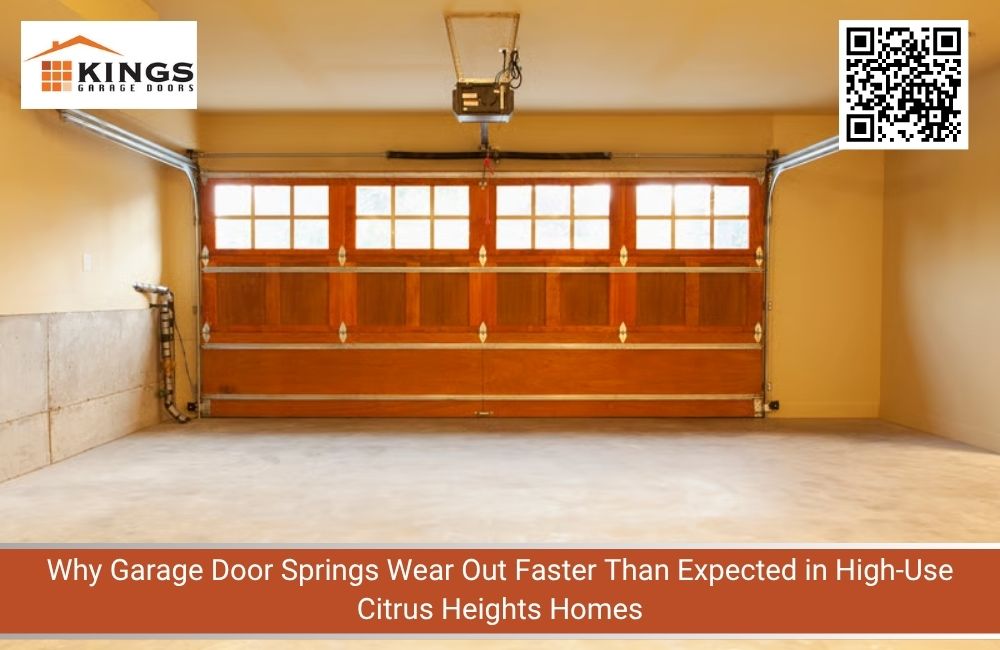
Why Garage Door Springs Wear Out Faster Than Expected in High-Use Citrus Heights Homes
Garage door springs do most of the heavy lifting every time a garage door opens or closes. In homes where the garage serves as the main entrance, those springs may cycle far more often than homeowners realize. Over time, frequent use, door weight, poor balance, heat, corrosion, and neglected maintenance can shorten spring life and lead to an unexpected Garage Door Repair. For Citrus Heights homeowners, understanding why springs wear out can make it easier to recognize trouble early and avoid putting unnecessary strain on the rest of the system.
A garage door spring rarely fails because of one isolated event. More often, repeated daily use gradually fatigues the metal until the spring can no longer maintain proper tension. High-use households simply reach that point sooner.
Why Garage Door Springs Wear Out
Garage door springs are designed to counterbalance the weight of the door. They store mechanical energy when the door closes and release it as the door opens, making it possible for the opener to move a heavy door with relatively little effort.
That repeated winding, unwinding, stretching, and contracting causes normal metal fatigue. Every complete opening and closing counts as a cycle, and springs are commonly rated according to how many cycles they are designed to handle.
A household that uses the garage door twice a day will accumulate cycles much more slowly than a family that operates it eight, ten, or more times daily.
High-Use Homes Reach Spring Limits Much Faster
Many Citrus Heights families use the garage rather than the front door when entering and leaving the house. Morning commutes, school trips, errands, deliveries, outdoor activities, and evening travel can add up quickly.
Daily Habits Matter More Than Calendar Age
A spring does not know whether it is five or ten years old. What matters most is how many times it has been placed under load.
Two neighboring homes may have identical garage doors installed on the same day, yet one spring system may wear significantly faster simply because that household uses the door more frequently.
This is why spring condition should be evaluated based on usage and performance rather than age alone.
Heavy Garage Doors Put Greater Demands on Springs
The spring system must be correctly matched to the weight of the garage door.
Insulated doors, wood doors, oversized double doors, decorative windows, and reinforced panels may weigh considerably more than basic single-layer doors.
When properly sized springs are installed, that weight can be managed safely. Problems occur when the spring is incorrectly matched or when modifications change the door's weight without adjusting the counterbalance system.
For example, adding insulation or replacing a damaged section with a heavier panel can alter door balance. The springs may then work harder during every cycle.
A professional Garage Door Installation should account for the complete weight of the finished door before selecting the spring system.
Poor Door Balance Accelerates Spring Wear
A correctly balanced garage door should move smoothly and remain under controlled spring support throughout its travel.
When balance is poor, one or more components may be carrying more load than intended.
Signs of a Balance Problem
The door may begin opening unevenly, feel heavier, close more quickly than before, or cause the opener to sound strained.
Homeowners should not attempt to correct balance by adjusting spring tension themselves. Garage door springs operate under significant force, and incorrect adjustments can cause serious injury or damage.
A professional inspection can determine whether the springs are losing tension or another component is affecting balance.
Frequent Short Cycles Still Count
Some homeowners open the garage door only partway to let someone out, retrieve equipment, or ventilate the space. While partial operation may not always equal the same mechanical movement as a full cycle, repeated movement still places stress on springs and connected hardware.
Constantly opening and closing the door unnecessarily can also increase wear on rollers, hinges, cables, bearings, and the opener.
Reducing avoidable operation is a simple way to limit unnecessary cycling without changing how the garage functions day to day.
Sacramento-Area Heat Can Expose Aging Springs
Citrus Heights experiences long stretches of hot, dry weather. Heat alone is not usually responsible for breaking a properly maintained spring, but seasonal conditions can make existing wear more noticeable.
Metal expands and contracts slightly as temperatures change, while older lubricants may dry out or collect debris. A spring that is already fatigued may begin producing more noise or operating less smoothly.
Hot garages can also place extra stress on openers and other moving components, making a poorly balanced door more difficult to operate reliably.
Corrosion Can Weaken Spring Material
Rust is another factor that can shorten spring life.
Even in a relatively dry climate, garage interiors can be exposed to moisture from rain, wet vehicles, irrigation, condensation, or minor leaks.
Corrosion attacks the spring's surface and can create weak points in the metal. As the spring continues cycling, those weakened areas experience repeated stress.
Homeowners should watch for visible rust and ask a technician whether the spring condition remains acceptable during routine service.
Incorrect Spring Sizing Causes Premature Failure
Garage door springs are not interchangeable.
Spring length, wire size, inside diameter, torque requirements, and door weight all affect proper selection.
If springs are undersized, they may need to work harder than intended. If they are incorrectly matched, the door may also become difficult to balance.
A system that has experienced repeated spring failures deserves a deeper diagnosis rather than simply installing another spring of the same specification.
Homeowners searching for Garage Door Repair Near Me should ask whether the technician will verify spring sizing and door weight rather than replacing parts without investigating why the failure occurred.
Damaged Cables and Bearings Can Add Extra Stress
Springs do not operate independently. They rely on cables, drums, bearings, tracks, and rollers to transfer force smoothly through the system.
A worn bearing can increase resistance. A cable problem may create uneven loading. Damaged rollers can make the door harder to move.
When those issues remain unresolved, the spring system may experience unnecessary strain during every opening and closing cycle.
This is one reason a complete inspection is more valuable than looking only at the broken spring.
Poor Maintenance Allows Small Problems to Grow
Garage door springs need relatively little homeowner attention, but the entire door system benefits from routine professional inspection.
Loose hardware, track problems, worn rollers, and opener strain can gradually change how the door moves.
A system that once operated smoothly may begin working against friction or imbalance without creating an obvious breakdown.
Early service gives homeowners an opportunity to correct those issues before they shorten the life of the springs.
Warning Signs That a Spring Is Wearing Out
Springs sometimes break suddenly, but there may be earlier signs of declining performance.
The Door Feels Heavier
If the garage door suddenly requires more effort or the opener begins struggling, spring tension may be weakening.
Movement Becomes Uneven
One side rising differently from the other may indicate a spring, cable, or balance issue.
The Door Opens More Slowly
A weakening counterbalance system may force the opener to carry more load.
New Popping or Squeaking Appears
Changes in sound deserve attention, especially when accompanied by rough movement.
A Gap Appears in a Torsion Spring
A visible separation in the coil usually indicates that the spring has already broken.
When any of these symptoms appear, professional Garage Door Repair Sacramento service can help determine whether the spring or another component is responsible.
Why You Should Not Keep Using a Door With a Broken Spring
A garage door opener is not designed to lift the full weight of a door without spring assistance.
Continuing to operate the system after a spring breaks may damage the motor, rail, trolley, cables, or top panel.
The door can also become extremely heavy and unpredictable if someone tries to lift it manually.
If you hear a loud snap or see a broken spring, stop using the door and keep people away from the opening until the system has been evaluated.
Should Both Springs Be Replaced?
Many double-width garage doors use two torsion springs. If both were installed at the same time and have completed approximately the same number of cycles, the second spring may also be approaching the end of its useful life.
In that situation, replacing both may be recommended to support balanced operation and reduce the chance of another failure shortly afterward.
The decision should be based on spring condition, age, cycle history, and system design rather than an automatic rule.
When Repeated Spring Failures Point to a Bigger Problem
If a garage door repeatedly breaks springs sooner than expected, something else may be wrong.
Possible contributing factors include incorrect spring sizing, excessive door weight, poor installation, damaged bearings, cable problems, or structural changes to the door.
Simply replacing the spring without identifying the cause can lead to another premature failure.
In severely deteriorated systems, Garage Door Replacement may eventually provide better long-term value, particularly when spring problems occur alongside damaged panels, failing tracks, widespread rust, or repeated opener issues.
How Citrus Heights Homeowners Can Extend Spring Life
The best approach is not to try to make springs last indefinitely. Every spring eventually wears out. Instead, homeowners should focus on keeping the entire door operating under the conditions it was designed for.
Avoid unnecessary cycles, pay attention to changes in movement, keep the garage environment reasonably dry, and arrange periodic professional inspections.
Most importantly, do not ignore a door that becomes heavy, crooked, noisy, or difficult to operate. These changes may indicate that the springs are no longer carrying the load correctly.
Frequently Asked Questions
Why did my garage door spring break earlier than expected?
High daily use, incorrect spring sizing, heavy door construction, corrosion, poor balance, or additional mechanical resistance can all contribute to premature failure.
Does opening the garage door frequently wear out the springs?
Yes. Springs wear according to operating cycles, so high-use households typically reach the spring's cycle limit sooner.
Can I use the garage door if one spring breaks?
It is safer to stop operating the system and have it inspected. A broken spring can leave the door extremely heavy and place excessive stress on the opener.
Can maintenance prevent garage door springs from breaking?
Maintenance cannot eliminate normal metal fatigue, but it can identify balance, corrosion, roller, cable, and hardware problems that may shorten spring life.
Is repeated spring failure normal?
No. If springs fail unusually often, the system should be evaluated for incorrect sizing, excessive door weight, poor balance, or other mechanical issues.
Treat Spring Wear as Part of the Whole Garage Door System
Garage door springs in high-use Citrus Heights homes can wear much faster than homeowners expect because daily operating cycles accumulate quickly. Door weight, balance, corrosion, heat, cable condition, and installation quality also influence how efficiently the springs perform.
Professional diagnosis is especially valuable when spring failures become frequent or the door begins operating differently. Kings Garage Door Repair & Installation serves Citrus Heights, Carmichael, Sacramento, and surrounding communities with spring inspections, repairs, opener diagnostics, and complete garage door service. Homeowners searching for Garage Repair Door Near Me can benefit from an inspection that identifies not only what failed, but why.
Kings Garage Door Repair & Installation
6428 Sol Way, Citrus Heights, CA 95621, United States
+1 (916) 806-8397
